
Have you ever wanted to see the rings of Saturn, the craters of the Moon, or distant galaxies with your own eyes? A telescope can bring the universe closer and turn an ordinary night into an unforgettable experience.
However, choosing your first telescope can be confusing. There are hundreds of models available, with different prices, sizes, and features. Some are designed for viewing planets, while others are better for observing galaxies and nebulae.
The good news is that you do not need the most expensive telescope to begin exploring the night sky.
In this guide, we will look at some beginner-friendly telescopes, explain what each type is best for, and help you decide which one fits your interests and budget.
What Should Beginners Look for in a Telescope?
Before buying a telescope, it helps to understand a few important features.
Aperture
Aperture is the diameter of the telescope’s main lens or mirror. It determines how much light the telescope can collect.
In general, a larger aperture allows you to see fainter objects and more detail, provided the optics and observing conditions are good.
For beginners, telescopes with apertures around 70–100 mm can be useful starting points. Larger models, such as 130–150 mm reflectors, can reveal more detail and are worth considering if you have enough space and budget.
Magnification
Magnification determines how large an object appears through the eyepiece.
However, higher magnification does not automatically mean better views. Excessive magnification can make an image dim, blurry, and difficult to focus.
A telescope with good optics and a stable mount is usually a better choice than a cheap telescope advertised with extremely high magnification numbers.
Mount Stability
The mount holds the telescope and allows you to point it at objects in the sky.
If the mount shakes every time you touch it, observing becomes frustrating. A stable mount makes it easier to focus and keep planets in view.
Beginners should pay close attention to the quality of the mount, not just the telescope itself.
Ease of Setup
Some telescopes require very little setup, while others involve alignment, balancing, or additional adjustments.
If you want to start observing quickly, a simple manual telescope may be a better choice than a complicated computerized system.
5 Telescopes Beginners Can Consider in 2026
The following models represent different approaches to beginner astronomy. They are examples to compare rather than a ranking based on our own hands-on testing. Check current prices, included accessories, and availability before purchasing.
1. Celestron AstroMaster 70AZ — A Simple Starting Point
The Celestron AstroMaster 70AZ is a small refractor telescope designed for straightforward observing.
Its 70 mm aperture collects enough light for enjoyable views of the Moon, and it can show bright planets as small disks under suitable conditions.
Best for:
- Beginners who want a simple telescope
- Observing the Moon and bright planets
- People who prefer a traditional tripod setup
Advantages:
- Relatively compact and easy to transport
- Straightforward manual operation
- Suitable for learning basic observing skills
Limitations:
- Its small aperture limits views of faint galaxies and nebulae.
- The included mount and accessories may affect the overall experience.
- It is not designed for detailed deep-sky astrophotography.
This type of telescope can be a reasonable starting point if your main goal is to explore the Moon and learn how to locate bright objects.
2. Sky-Watcher Heritage 130P — A Versatile Reflector
The Sky-Watcher Heritage 130P is a tabletop Dobsonian reflector with a 130 mm primary mirror.
Its larger aperture gathers more light than a typical 70 mm beginner telescope, making it useful for observing the Moon, planets, star clusters, and some brighter nebulae.
Best for:
- Beginners interested in a variety of celestial objects
- Observers who want more light-gathering ability
- People who have a stable table or platform for the telescope
Advantages:
- Larger aperture for observing faint objects
- Simple manual controls
- Compact, collapsible design
Limitations:
- It needs a sturdy surface at a comfortable height.
- You must learn to locate objects manually.
- Its open optical tube requires care when storing and transporting it.
If you want to explore more than the Moon and planets, a 130 mm reflector is a useful option to investigate.
3. Celestron StarSense Explorer DX 130AZ — Help Finding Objects
One of the biggest challenges for new astronomers is finding objects in the sky.
The Celestron StarSense Explorer DX 130AZ combines a 130 mm reflector with a smartphone-assisted system designed to help users locate celestial targets.
The accompanying app uses the phone’s camera and sensors to guide you toward selected objects.
Best for:
- Beginners who struggle to find planets and stars
- People who want smartphone assistance
- Observers interested in both planets and brighter deep-sky objects
Advantages:
- Smartphone-assisted navigation
- Larger aperture than many entry-level refractors
- Manual control of the telescope
Limitations:
- You need a compatible smartphone.
- The system still requires setup and correct alignment.
- It costs more than some basic manual telescopes.
This is worth considering if you want help finding objects without moving directly to a fully computerized telescope.
4. Celestron NexStar 4SE — Computerized Observing
The Celestron NexStar 4SE is a compact computerized telescope with a 102 mm aperture.
Its motorized mount can help locate and track selected celestial objects after the telescope has been correctly aligned.
This can make observing more convenient, particularly when you want to move between different targets during a session.
Best for:
- Beginners who prefer automated assistance
- Observing the Moon and planets
- People who value a compact optical tube
Advantages:
- Computerized object locating and tracking
- Compact design
- Suitable optics for lunar and planetary observing
Limitations:
- It is more expensive than a simple manual telescope.
- It requires power and alignment.
- Its narrower field of view makes some large deep-sky objects harder to frame.
A computerized telescope can reduce the difficulty of finding targets, but it does not eliminate the need to learn basic astronomy.
5. Sky-Watcher Virtuoso GTi 150P — A Larger Computerized Option
The Sky-Watcher Virtuoso GTi 150P combines a 150 mm reflector with a motorized tabletop mount and wireless control features.
Its larger mirror collects more light than the smaller telescopes listed above, while its computerized capabilities can help with locating and tracking targets.
Best for:
- Beginners with a larger budget
- People interested in planets and deep-sky observing
- Observers who want automated assistance
Advantages:
- Relatively large aperture
- Computerized locating and tracking
- Compact tabletop format compared with a full-size Dobsonian
Limitations:
- It costs more than basic manual telescopes.
- It requires a suitable table or platform.
- Setup and alignment take some learning.
This is an option for someone who wants a telescope they can continue using as their observing skills develop.
Which Telescope Is Best for What You Want to See?
Different telescopes suit different observing goals.
Best for the Moon
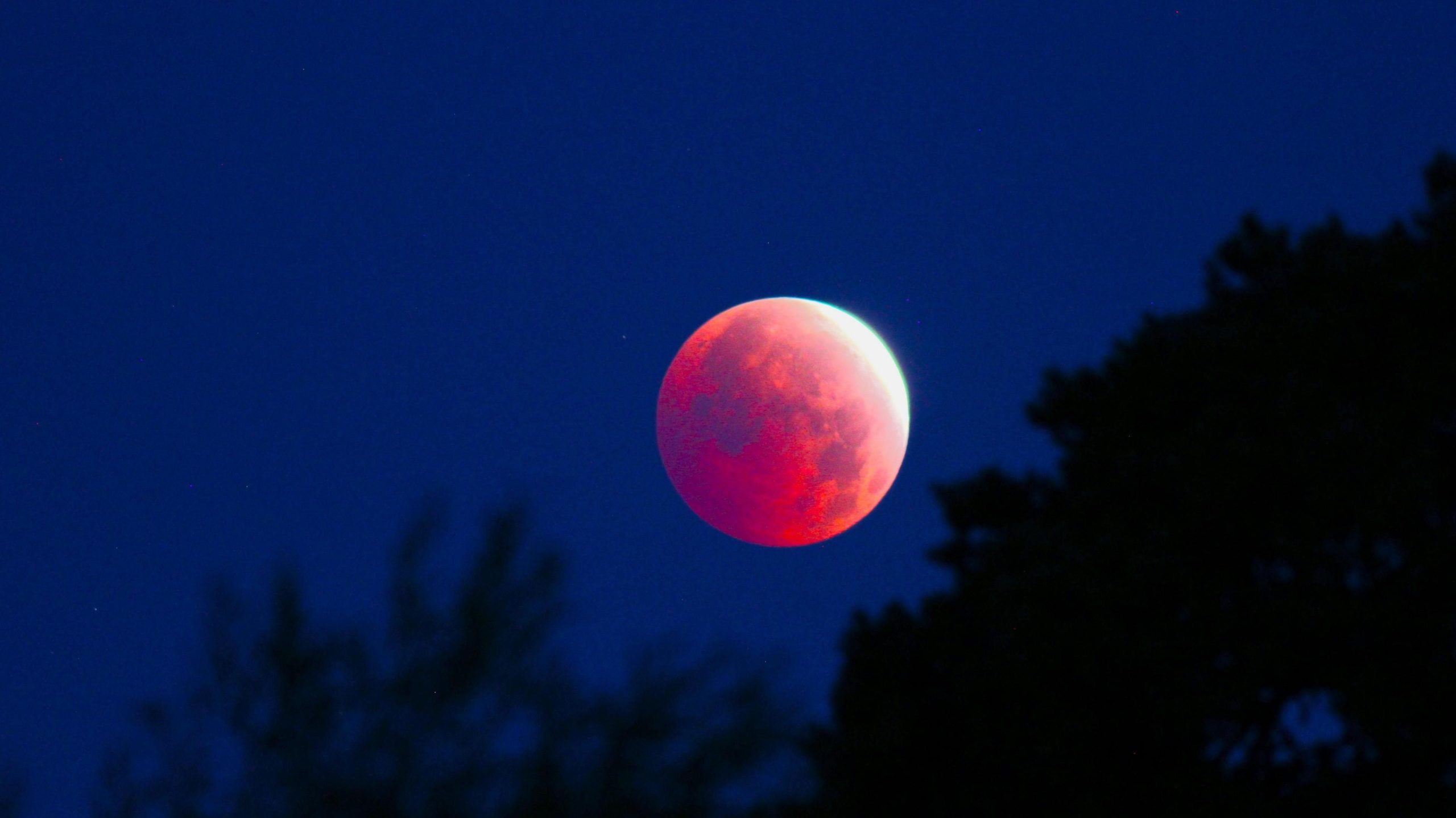
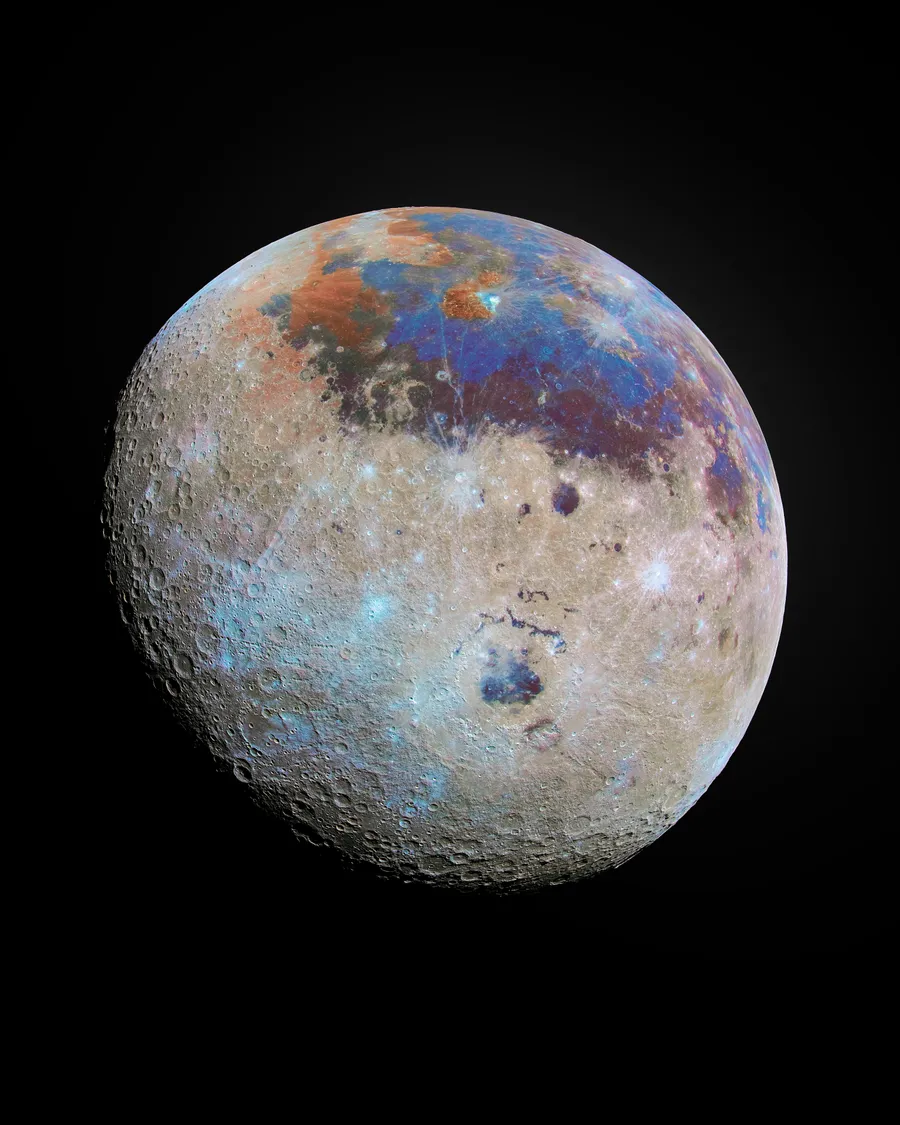
A small refractor with a 70–100 mm aperture can provide satisfying views of the Moon’s craters, mountains, and dark plains.
You do not need a large telescope to begin exploring lunar details.
Best for Saturn and Jupiter
A telescope with good optics, a stable mount, and enough aperture can reveal Jupiter’s four largest moons and, under suitable conditions, some of its cloud bands.
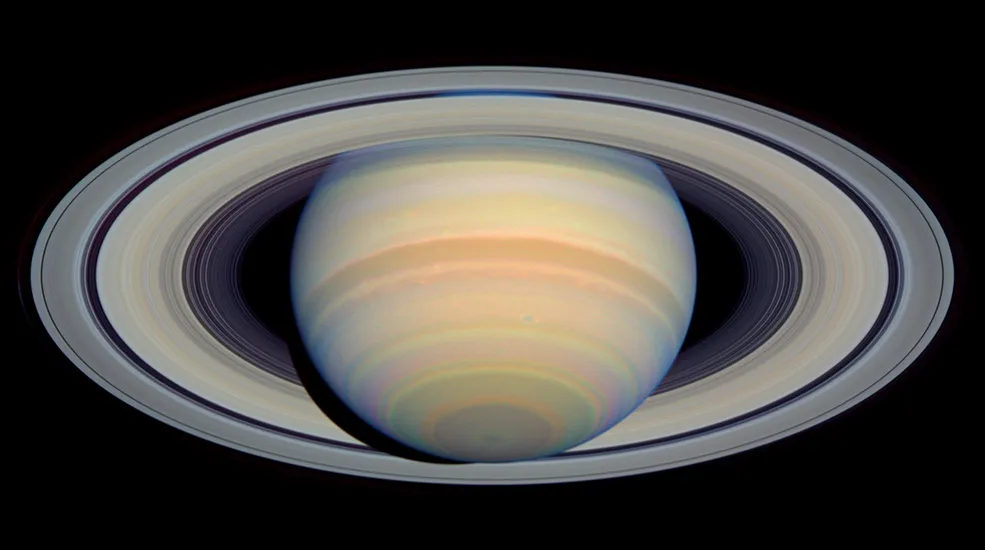
Saturn’s rings can also be observed through modest telescopes when the planet is suitably positioned and observing conditions are good.
A larger aperture can reveal more detail, but atmospheric turbulence and the planet’s apparent size also matter.
Best for Galaxies and Nebulae
If you want to observe objects beyond our solar system, aperture becomes especially important.
A 130–150 mm reflector can reveal brighter deep-sky objects, including some star clusters and nebulae, from a reasonably dark location.
Galaxies will generally appear much fainter and less detailed through an amateur telescope than they do in long-exposure photographs.
Best for Astrophotography
Visual observing and astrophotography require different equipment.
A telescope that is excellent for looking at planets may not be ideal for photographing galaxies. Long-exposure deep-sky imaging often requires a suitable tracking mount, a compatible camera, and careful setup.
If your main goal is photographing the Milky Way, a camera with a suitable wide-angle lens and a sturdy tripod may be a better first purchase than a telescope.
For planetary photography, different equipment and techniques are used.
How Much Should You Spend on Your First Telescope?
Your budget should depend on what you want to observe and how often you expect to use the telescope.
Entry-Level Budget
A basic telescope can help you learn the fundamentals and explore the Moon and bright planets.
At this level, prioritize stable construction, usable optics, and straightforward controls rather than impressive magnification claims.
Mid-Range Budget
With a larger budget, you may be able to choose a telescope with a bigger aperture or smartphone-assisted navigation.
This can make it easier to observe a wider range of celestial objects.
Higher Budget
More expensive telescopes may include computerized mounts, tracking, larger apertures, or smart imaging features.
However, spending more does not guarantee that a telescope will suit your needs. Choose features that solve a real problem for you.
Remember to include the cost of accessories, transportation, power supplies, and any additional equipment you might need.
Common Mistakes to Avoid When Buying a Telescope
Choosing Based on Magnification Alone
A telescope advertised with extremely high magnification is not necessarily a good telescope.
Aperture, optical quality, mount stability, and observing conditions are more important than a large number printed on the box.
Buying a Telescope With a Poor Mount
An unstable mount can make even a decent optical tube difficult to use.
Always consider how securely the telescope is supported and how easily it can be pointed.
Expecting Professional Astrophotography Results
Photographs of colorful galaxies and nebulae often involve long exposures, image stacking, and processing.
What you see through an eyepiece is usually more subtle. Planets may look small, and faint galaxies may appear as dim patches of light.
That does not make observing less exciting. You are seeing light from real objects in space with your own eyes.
Forgetting About Light Pollution
Bright city lights make faint celestial objects more difficult to observe.
A good telescope can help, but it cannot completely remove the effects of a bright sky. If possible, observe from a darker location.
Ignoring Portability
A large telescope may offer excellent views, but it is not useful if it is too difficult to move or set up.
Consider where you will store it, where you will observe, and whether you need to carry it outdoors.
How to Get Started With Your First Telescope
Once you have chosen a telescope, begin with easy targets.
- Start with the Moon. Its craters and mountains are rewarding targets and relatively easy to find.
- Learn to focus. Practice until the image looks as sharp as the conditions allow.
- Try bright planets. Use a star map or astronomy app to find out which planets are visible.
- Observe from a dark location. This will help when you begin looking for star clusters and nebulae.
- Keep a record. Write down what you observed and the conditions of each session.
Give yourself time to learn. Astronomy becomes easier as you become familiar with the sky and your equipment.
Final Thoughts
The best beginner telescope is not necessarily the biggest or most expensive one. It is the telescope that matches your interests, budget, and observing conditions.
A simple refractor can be a good introduction to the Moon and bright planets. A 130 mm reflector can offer more versatility, while a computerized telescope can help you locate and track objects.
Before purchasing, consider what you want to see, how much space you have, and whether you prefer manual or automated operation.
With the right expectations and a little patience, your first telescope can open the door to years of exploring the universe.
Frequently Asked Questions
Can beginners see Saturn’s rings?
Yes. A suitable telescope can reveal Saturn’s rings when observing conditions and the planet’s orientation allow. The rings may appear small, so a steady mount and good focus are important.
Can I see galaxies with a beginner telescope?
Some brighter galaxies can be observed with beginner telescopes, particularly from dark locations. They usually appear as faint patches rather than the colorful images seen in photographs.
Is a reflector or refractor better for beginners?
Both can be good choices. Refractors are often straightforward to maintain, while reflectors can provide a larger aperture for the money. Your budget, preferred targets, and storage space should guide your decision.
Do I need a computerized telescope?
No. Manual telescopes can be excellent for learning the sky and may provide more aperture for your budget. Computerized systems can make locating objects easier, but they add cost and setup requirements.
Can I use a telescope during the day?
Some telescopes can be used for terrestrial viewing with suitable accessories. However, never point a telescope or binoculars at the Sun without a properly designed solar filter securely fitted over the front aperture. Looking at the Sun through unfiltered optical equipment can cause permanent eye damage.
What is the most important feature in a beginner telescope?
Aperture is important because it determines light-gathering ability, but it is not the only factor. Optical quality, mount stability, ease of use, and portability all contribute to a good observing experience.
Leave a Reply