
October brings one of the most recognizable full Moons of the year: the Hunter’s Moon.
In 2026, October’s full Moon will reach peak illumination on October 26. However, skywatchers can already enjoy the Moon rising in the evening of October 25, when it will appear low above the eastern horizon around sunset.
But why is October’s full Moon called the Hunter’s Moon, and is it actually different from other full Moons?
Here is everything you need to know.
When Is the Hunter’s Moon in 2026?
The Hunter’s Moon reaches its fullest point on October 26, 2026, at 04:11 UTC.
The Moon will appear essentially full throughout the surrounding nights, so you don’t have to catch the exact moment of peak illumination to enjoy it.
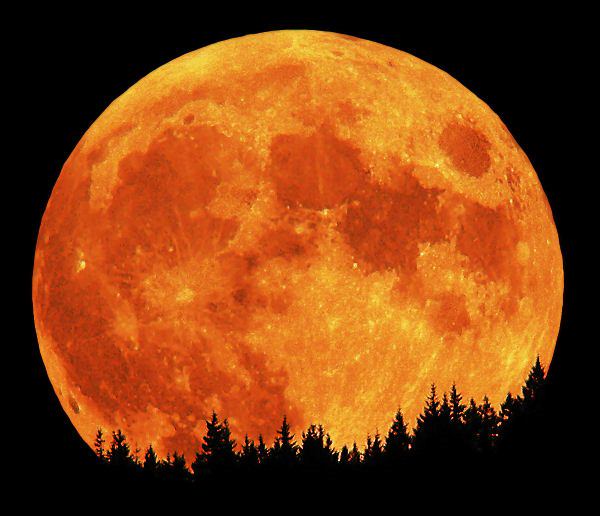
For many observers, the evening of October 25 will be an excellent opportunity to watch the full Moon rise. As it appears near the horizon shortly after sunset, the Moon can sometimes take on a warm yellow or orange appearance because its light passes through more of Earth’s atmosphere.
Why Is It Called the Hunter’s Moon?
The name Hunter’s Moon comes from traditional seasonal naming of full Moons.
After the Harvest Moon, fields were often cleared and autumn was progressing toward winter. Historically, the bright Moon provided additional light that helped hunters see animals and prepare for the colder months ahead.
The name became associated with October’s full Moon in traditional North American and European calendars.
Like other traditional full Moon names, the Hunter’s Moon is a cultural name rather than an astronomical classification.
Is the Hunter’s Moon Actually Bigger?
You may notice that the Moon can look enormous when it rises near the horizon.
However, the Moon does not actually become dramatically larger simply because it is close to the horizon.
This is known as the Moon illusion.
When the Moon is near the horizon, your brain compares it with familiar objects such as trees, buildings and mountains. This can make the lunar disk appear much larger than when it is high overhead.
The Moon’s actual apparent size changes only slightly during its orbit because its distance from Earth varies.
How to See the Hunter’s Moon
You don’t need a telescope to see the Hunter’s Moon.
For the best experience:
- Find a location with a clear view toward the eastern horizon.
- Go outside around sunset on October 25.
- Watch as the Moon begins to rise.
- Move away from bright city lights if possible.
- Use binoculars if you want to see more detail on the lunar surface.
- A camera or smartphone can capture excellent Moonrise photographs when the Moon is close to the horizon.
A landscape with trees, mountains or buildings can actually make the photograph more interesting because it gives the Moon a sense of scale.
What Can You See on the Moon?
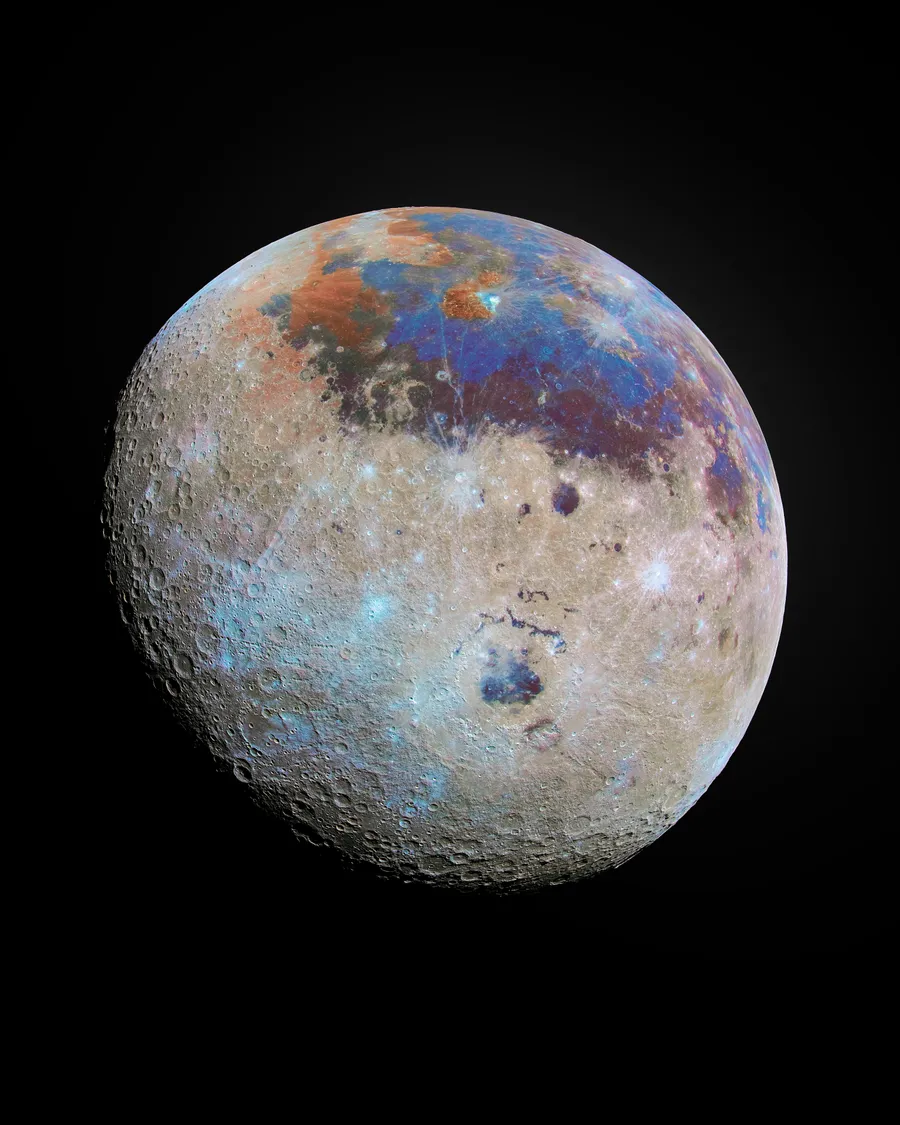
Even without a telescope, you can see several dark regions across the lunar surface.
These are called lunar maria. Despite their name, they are not oceans. They are enormous plains of ancient volcanic rock formed billions of years ago.
With binoculars or a small telescope, many craters and mountain ranges become much easier to see.
However, there is an interesting difference between observing a full Moon and a partially illuminated Moon.
When sunlight strikes the Moon at an angle near the boundary between light and darkness, called the terminator, shadows make craters and mountains stand out more dramatically.
During the exact full Moon, the surface is fully illuminated, so some of those shadows disappear.
Will the Hunter’s Moon Look Orange?
It can.
When the Moon is close to the horizon, its light travels through a thicker layer of Earth’s atmosphere before reaching your eyes.
The atmosphere scatters shorter blue wavelengths more strongly, allowing more of the longer red and orange wavelengths to reach you.
As a result, the Moon can appear yellow, orange or even reddish when it is low in the sky.
The color depends on atmospheric conditions, dust, pollution and clouds.
Can You Photograph the Hunter’s Moon?
Absolutely.
The Hunter’s Moon is a great target for beginner astrophotographers because it is bright enough to photograph without specialized equipment.
If you’re using a camera:
- Use a tripod.
- Start with a relatively fast shutter speed.
- Keep ISO relatively low.
- Focus carefully on the Moon.
- Take several exposures with different settings.
- Include a foreground object such as a building, tree or mountain.
If you’re using a smartphone, use manual or Pro mode if available and reduce exposure when the Moon appears overexposed.
One of the most interesting photographs is often not a close-up of the Moon, but a wide shot showing the Moon rising above the landscape.
Is the Hunter’s Moon a Supermoon?
The name Hunter’s Moon does not mean that the Moon is automatically a supermoon.
A supermoon is a full Moon that occurs close to the point in the Moon’s elliptical orbit when it is nearest to Earth.
The traditional name Hunter’s Moon simply refers to October’s full Moon.
So these are two different concepts: one is a traditional seasonal name, while the other describes the Moon’s orbital position.
When Is the Next Full Moon?
After the Hunter’s Moon, the next full Moon will occur in November 2026.
Until then, October’s Moon will continue to change phases and provide plenty of opportunities for observation.
October is also packed with other astronomical events, including the Draconid and Orionid meteor showers, making it one of the more interesting months of the year for skywatchers.
Final Thoughts
The Hunter’s Moon is more than just a traditional name for October’s full Moon.
It combines astronomy, history and seasonal traditions into an event that anyone can enjoy.
On the evening of October 25, find a place with a clear eastern horizon and watch the Moon rise. Then, on October 26, look up again to see the Moon near its peak illumination.
You don’t need a telescope, expensive camera or special equipment.
All you really need is a clear sky.
Leave a Reply